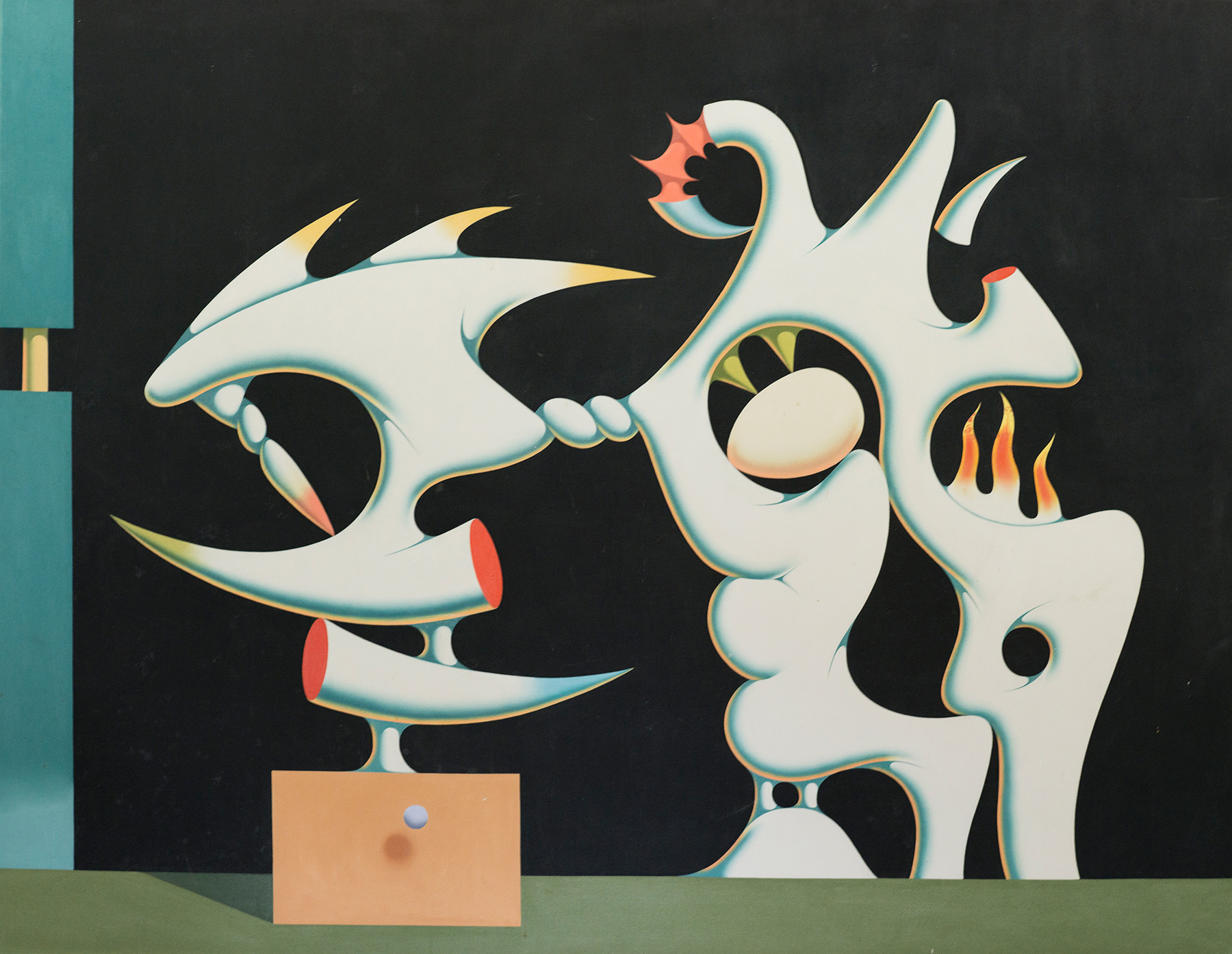
The intention to identify, dream, conceive, and render visual alternatives beyond tangible reality has been present throughout the history of both Eastern and Western art since time immemorial. In the West, examples reach as far back as the 15th and 16th centuries with The Garden of Earthly Delights by Hieronymus Bosch (c. 1450–1516), as well as the seasons and elements painted by Giuseppe Arcimboldo (1527–1593), and, closer to our time, the metaphysical painting of Giorgio de Chirico (1888–1978), produced in Italy during the early decades of the 20th century. At the same time, Hugo Ball and Tristan Tzara, in Zurich in 1916, gave rise to the Dadaist movement and proposed subverting the rationalist bourgeois order that prevailed at the time, through the valorization of the irrational, the oneiric, automatism, and the expression of the subconscious.